St. Margaret of Cortona
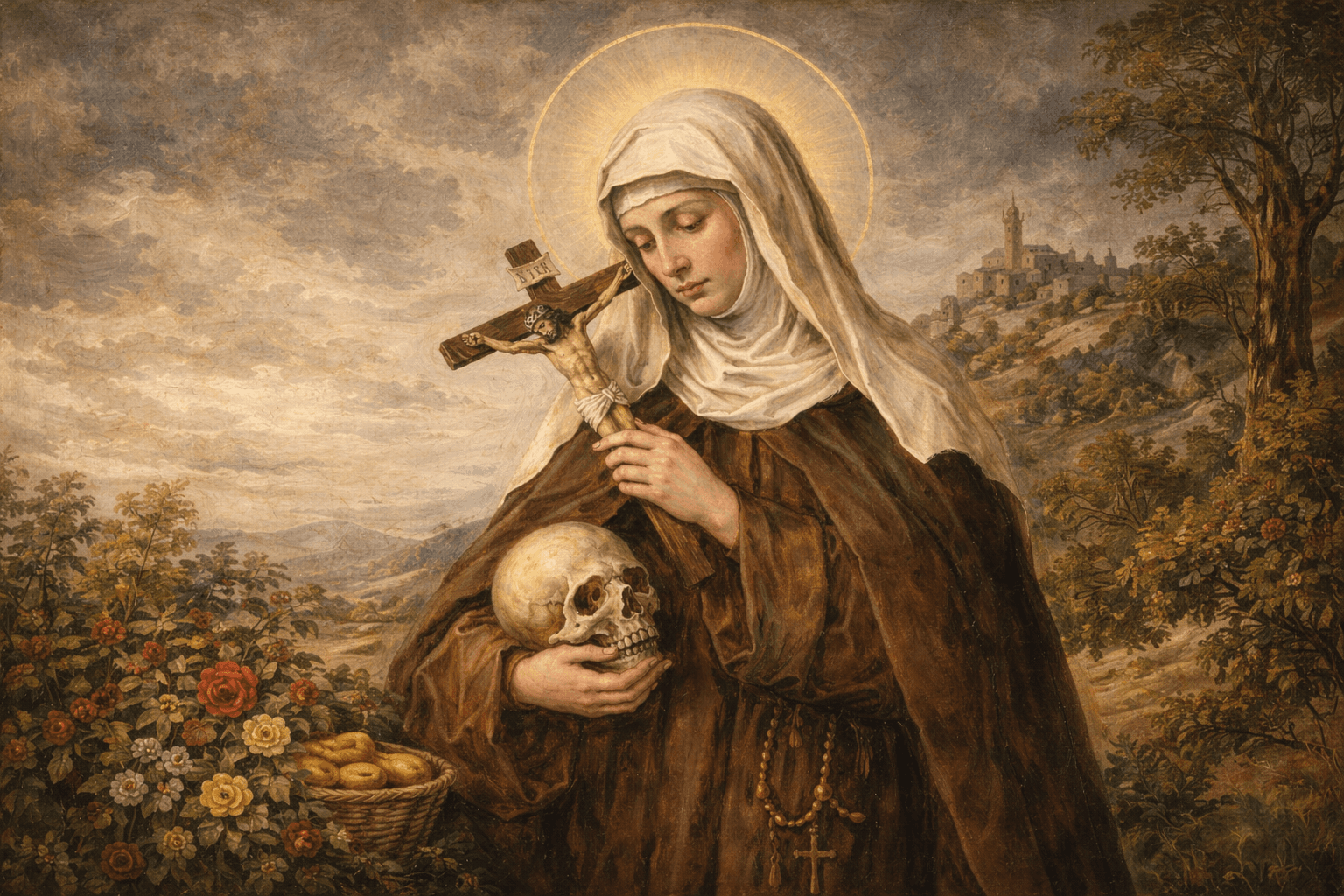
In a world that often tells us our past defines us, St. Margaret of Cortona reminds us that grace rewrites every story. Known first for a life of scandal and later for heroic repentance, she became a radiant witness to the mercy of Christ. Her journey from public sin to profound sanctity is not a tale of shame—but of transformation.
Margaret’s life speaks directly to our time. She did not deny her failures. She confronted them, surrendered them, and allowed God to rebuild her heart. Through prayer, penance, and radical charity, she became a Franciscan tertiary and a spiritual mother to the poor. Her conversion was not quiet or private—it bore visible fruit in service, humility, and deep devotion to the Passion of Christ.
This week, we reflect on a powerful truth: no soul is beyond redemption. Margaret’s witness challenges us to examine our attachments, trust in divine mercy, and begin again—no matter how far we believe we have fallen.
This biography traces Margaret’s early life, her long relationship outside of marriage, the tragic murder of her partner, and her dramatic conversion. It highlights her entrance into the Third Order of St. Francis, her mystical experiences, and her tireless service to the poor and sick.
Why it matters: Margaret’s life confronts modern relativism and despair simultaneously. She neither excused her sin nor doubted God’s mercy. Her model offers a framework for authentic repentance rooted in accountability, sacramental life, and concrete works of charity.
Vatican News emphasizes Margaret’s intense penitential practices, her mystical conversations with Christ, and her founding of a hospital for the poor. It situates her within the broader Franciscan spiritual tradition.
Why it matters: Her life underscores the Catholic understanding of penance as restorative rather than punitive. Margaret’s austerities were ordered toward love—healing her soul and serving others.
This historical entry provides detailed context regarding her canonization, spiritual directors, and controversies surrounding her penitential life. It offers insight into medieval spirituality and ecclesial discernment.
Why it matters: Understanding Margaret within her historical context prevents sentimentalizing her story. Her sanctity emerged within rigorous spiritual formation and ecclesial guidance—an important reminder that conversion thrives within the Church.
Margaret’s conversion began with a shock: the violent death of the man with whom she had lived for years. In that moment of confrontation with mortality, she recognized the fragility of worldly attachment. But awakening is only the first step. She then chose confession, reconciliation, and disciplined spiritual direction.
For those struggling with guilt, shame, or past decisions, her life offers a roadmap:
Honest acknowledgment of sin
Sacramental reconciliation
Structured spiritual guidance
Concrete works of mercy
Perseverance in prayer
Sanctity is not the absence of a past—it is the transformation of it.
“The mercy of God is greater than any sin.” — St. Margaret of Cortona