St. Ambrose of Milan: Shepherd of the Church and Defender of the Faith
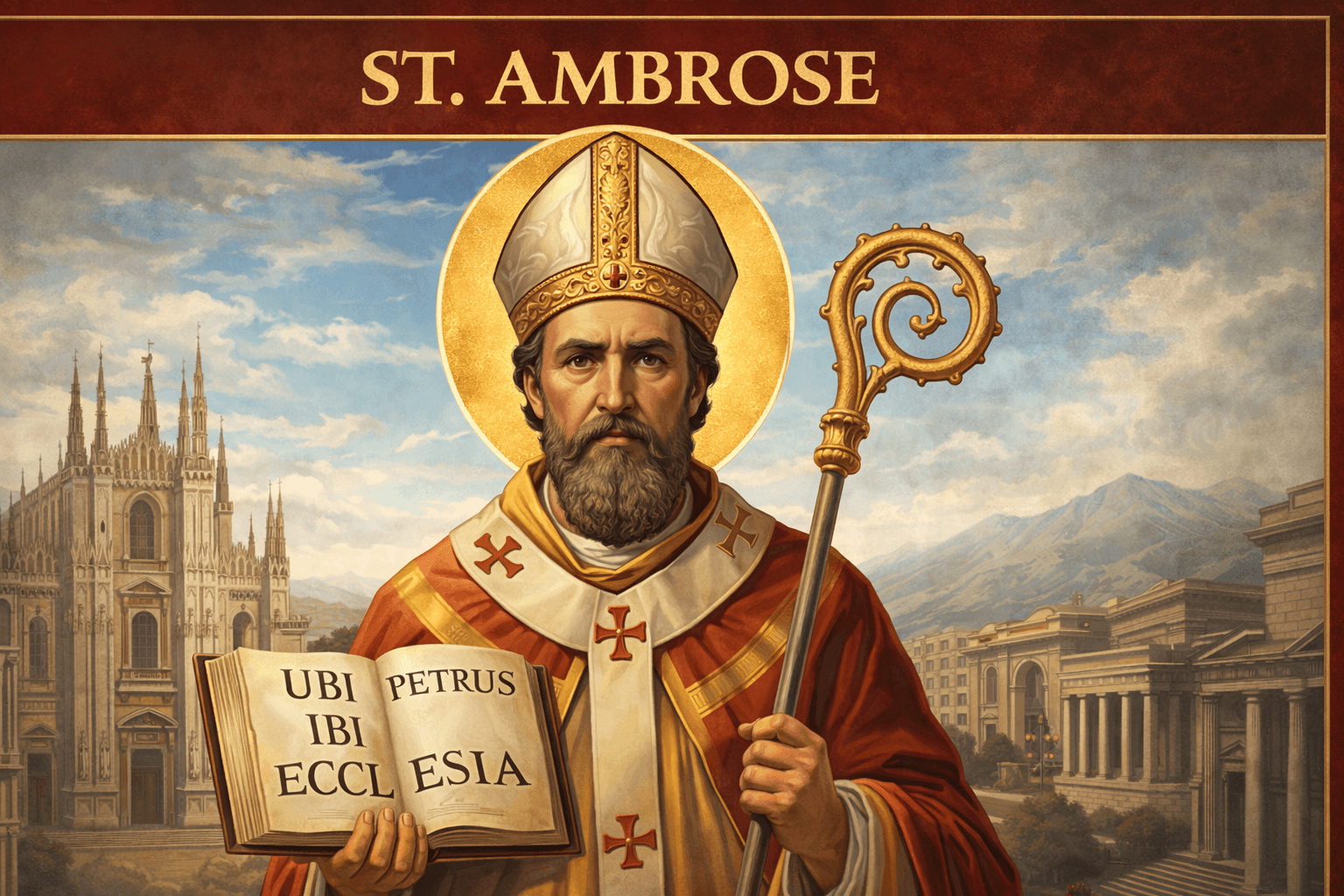
St. Ambrose was one of the most influential leaders of the early Church, known for his fearless defense of orthodoxy, his pastoral care of the faithful, and his profound impact on Christian theology and liturgy. A gifted speaker and administrator, Ambrose helped shape the Church’s relationship with secular authority and played a decisive role in the conversion of St. Augustine.
A comprehensive historical and theological overview of St. Ambrose’s life, episcopacy, and lasting influence on Church doctrine.
Why it matters: This source places Ambrose firmly among the great Fathers of the Church, highlighting how his leadership helped define the Church’s authority in relation to emperors and civil power.
A papal catechesis reflecting on Ambrose’s pastoral wisdom, teaching authority, and spiritual legacy.
Why it matters: The Vatican’s reflection emphasizes Ambrose not just as a historical figure, but as a model bishop whose example remains relevant for Church leadership today.
St. Ambrose is remembered not only for his theological writings, but also for his courage in confronting imperial authority when moral truth was at stake. His insistence that even emperors were subject to God’s law marked a turning point in Church–state relations. As a teacher, preacher, and liturgical reformer, Ambrose helped lay the foundation for Western Christianity and continues to inspire pastors and laypeople alike to live the faith with integrity and conviction.
“Where Peter is, there is the Church.” — St. Ambrose