Quinquagesima Sunday: The Final Call Before Lent
Quinquagesima Sunday marks the final Sunday before Ash Wednesday in the traditional Roman calendar. Its name comes from the Latin quinquagesimus, meaning “fiftieth,” referring to its position roughly fifty days before Easter. Though no longer observed in the modern Ordinary Form calendar, it remains spiritually significant as the Church’s final preparation before entering Lent.
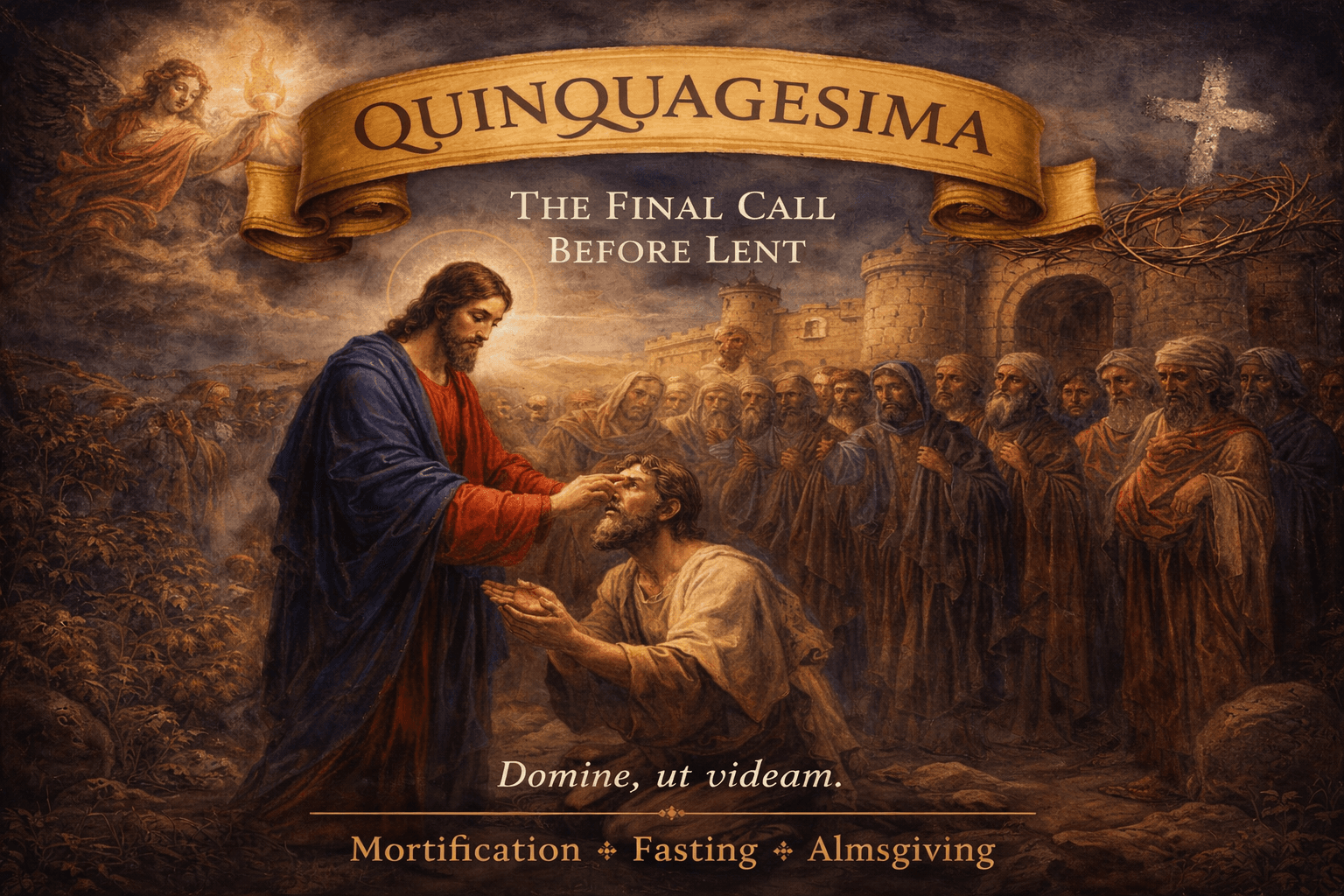
The Gospel traditionally proclaimed on this day recounts Christ foretelling His Passion and healing the blind man near Jericho (Luke 18:31–43). The blind man’s plea — “Lord, that I may see” — becomes the spiritual cry of the faithful. Before the ashes are imposed and the fast begins, the Church invites us to examine our spiritual blindness and prepare intentionally for the discipline of Lent.
Historically, Quinquagesima signaled the closing of festivities and the beginning of interior recollection. Violet vestments replace celebratory tones. The Alleluia is already silenced. The faithful are reminded that conversion requires clarity, humility, and resolve.
This Sunday is not yet Lent — but it is the last warning bell before it.
This entry explains the historical origin and theological development of the pre-Lenten season in the Roman Rite. It details how the numbered Sundays before Lent (Septuagesima, Sexagesima, and Quinquagesima) gradually formed as a transitional penitential period leading into the Great Fast, including liturgical changes such as the suppression of the Alleluia.
Why it matters: This is the most comprehensive historical explanation available in English. It provides readers with doctrinal clarity on why Quinquagesima exists and how the Church intentionally structured spiritual preparation before Lent. Ideal for readers interested in traditional liturgical development.
Luke 18:31–43 — Jesus Foretells His Passion and Heals the Blind Man
United States Conference of Catholic Bishops (USCCB)
The official U.S. Catholic translation of the Gospel traditionally read on Quinquagesima Sunday. The passage recounts Christ predicting His Passion and restoring sight to the blind beggar near Jericho.
Why it matters: Quinquagesima centers on spiritual sight before entering Lent. The blind man’s plea — “Lord, that I may see” — encapsulates the interior posture required for authentic Lenten conversion. Linking directly to the Gospel grounds your post in Scripture.
This document outlines the principles behind the post–Vatican II reform of the Roman Missal, including the restructuring of the liturgical calendar that removed the pre-Lenten season from the Ordinary Form.
Why it matters: This provides context for why Quinquagesima is observed in the Traditional Latin Mass but not in the current Ordinary Form calendar. It helps readers understand the difference without polemics, grounding the discussion in official Church documentation.
The pre-Lenten season emerged gradually in the early medieval Roman Rite as the Church recognized the pastoral wisdom of gradual preparation. Rather than entering the austerity of Lent abruptly, the faithful were given a “spiritual runway” — three Sundays to begin interior conversion before the discipline of fasting began.
By the time of the Gregorian Sacramentary, Septuagesima, Sexagesima, and Quinquagesima were firmly embedded in the Roman calendar. Violet vestments replaced green. The Gloria ceased. Most notably, the Alleluia was silenced — a powerful liturgical signal that the Church was already turning toward penance.
Though removed from the Ordinary Form calendar in 1969, these Sundays remain part of the Traditional Latin Mass and continue to shape the spiritual imagination of many Catholics.
The Spiritual Symbolism of the Blind Man
The Gospel traditionally proclaimed (Luke 18:31–43) places two realities side by side:
Christ announces His coming Passion.
A blind man cries out for sight.
The apostles do not yet understand what Christ is telling them. In contrast, the blind beggar sees more clearly than they do — because he sees with faith.
This juxtaposition is deliberate. Before Lent begins, the Church asks:
Do we recognize our spiritual blindness?
Do we desire healing?
Are we prepared to follow Christ toward Calvary?
The blind man’s prayer becomes the pre-Lenten prayer of the Church:
“Lord, that I may see.”
Practical Preparation Before Ash Wednesday
Quinquagesima is an ideal moment to:
Finalize your Lenten rule of life.
Examine your conscience more seriously.
Schedule Confession.
Reduce distractions and unnecessary noise.
Choose one concrete sacrifice that stretches you beyond comfort.
Rather than entering Lent reactively, this Sunday encourages intentionality.
Traditional Liturgical Markers
Liturgical color: Violet
Alleluia: Omitted
Gloria: Not said
Tone: Penitential but anticipatory
These subtle shifts form the Church’s pedagogy. Conversion does not begin with ashes; it begins with awareness.
A Reflection for the Week
Before Ash Wednesday arrives, ask:
Where in my life am I still blind?
Where am I resisting Christ’s call to deeper surrender?
What would true spiritual sight change?
Lent is not merely about giving something up — it is about receiving clearer vision.
“Lord, that I may see.” — Luke 18:41