Isaiah 58:7–10 — True Fasting and the Light of Mercy
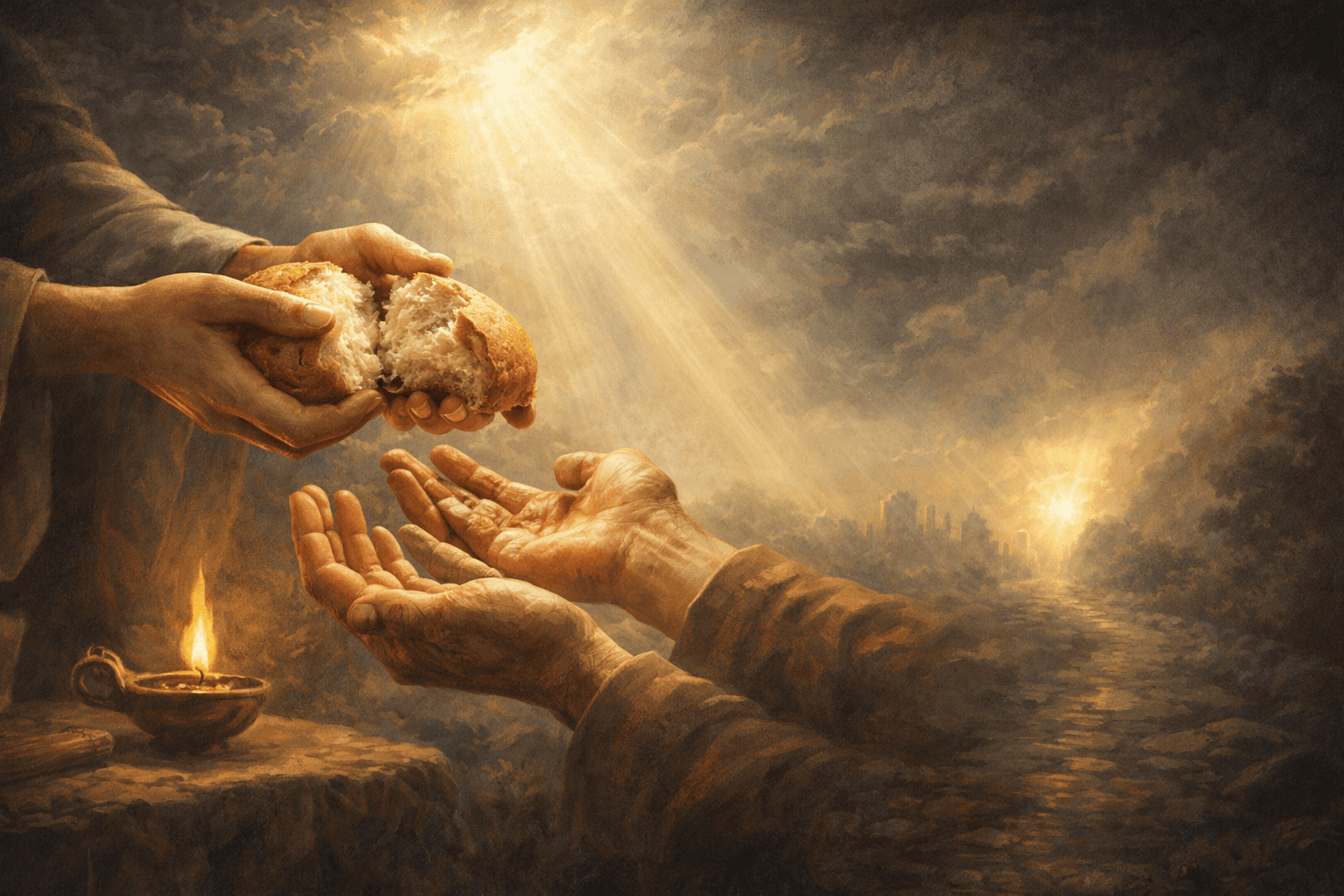
In Isaiah 58:7–10, the Lord redefines what authentic worship looks like. Rather than focusing on ritual alone, God calls His people to a faith expressed through mercy, justice, and compassion. This passage challenges believers to see care for the vulnerable not as an optional virtue, but as a core expression of fidelity to God.
Scripture (Isaiah 58:7–10)
Is this not, rather, the fast that I choose:
releasing those bound unjustly,
untying the thongs of the yoke;
Setting free the oppressed,
breaking every yoke?Is it not sharing your bread with the hungry,
bringing the afflicted and the homeless into your house;
Clothing the naked when you see them,
and not turning your back on your own flesh?Then your light shall break forth like the dawn,
and your wound shall quickly be healed;
Your vindication shall go before you,
the glory of the Lord shall be your rear guard.Then you shall call, and the Lord will answer,
you shall cry for help, and He will say: Here I am.
If you remove from your midst oppression,
false accusation and malicious speech;If you bestow your bread on the hungry
and satisfy the afflicted;
Then light shall rise for you in the darkness,
and the gloom shall become for you like midday.
Isaiah’s message cuts through the temptation to reduce faith to performance. God makes clear that prayer and fasting lose their meaning when they are separated from justice and love of neighbor. The prophet insists that devotion to God must reshape how we treat the poor, the oppressed, and even those closest to us.
What follows is a promise. When mercy becomes the pattern of life, light follows. Healing follows. God draws near. Isaiah presents a direct connection between social justice and spiritual intimacy, reminding the faithful that holiness is revealed most clearly in compassion lived out.
This passage holds particular weight during Lent, when the Church emphasizes fasting, prayer, and almsgiving. Isaiah reminds us that these disciplines must overflow into action, transforming hearts and communities alike.
Isaiah 58 stands at the foundation of Catholic social teaching, affirming that love of God cannot be separated from love of neighbor. The passage challenges believers to examine not only personal devotion, but the concrete ways faith responds to suffering and injustice. In a world marked by division and need, Isaiah’s call remains urgent: mercy is the truest form of worship, and charity is the path by which God’s light enters the world.
“Then light shall rise for you in the darkness, and the gloom shall become for you like midday.” — Isaiah 58:10