St. Athanasius: Defender of the Divinity of Christ
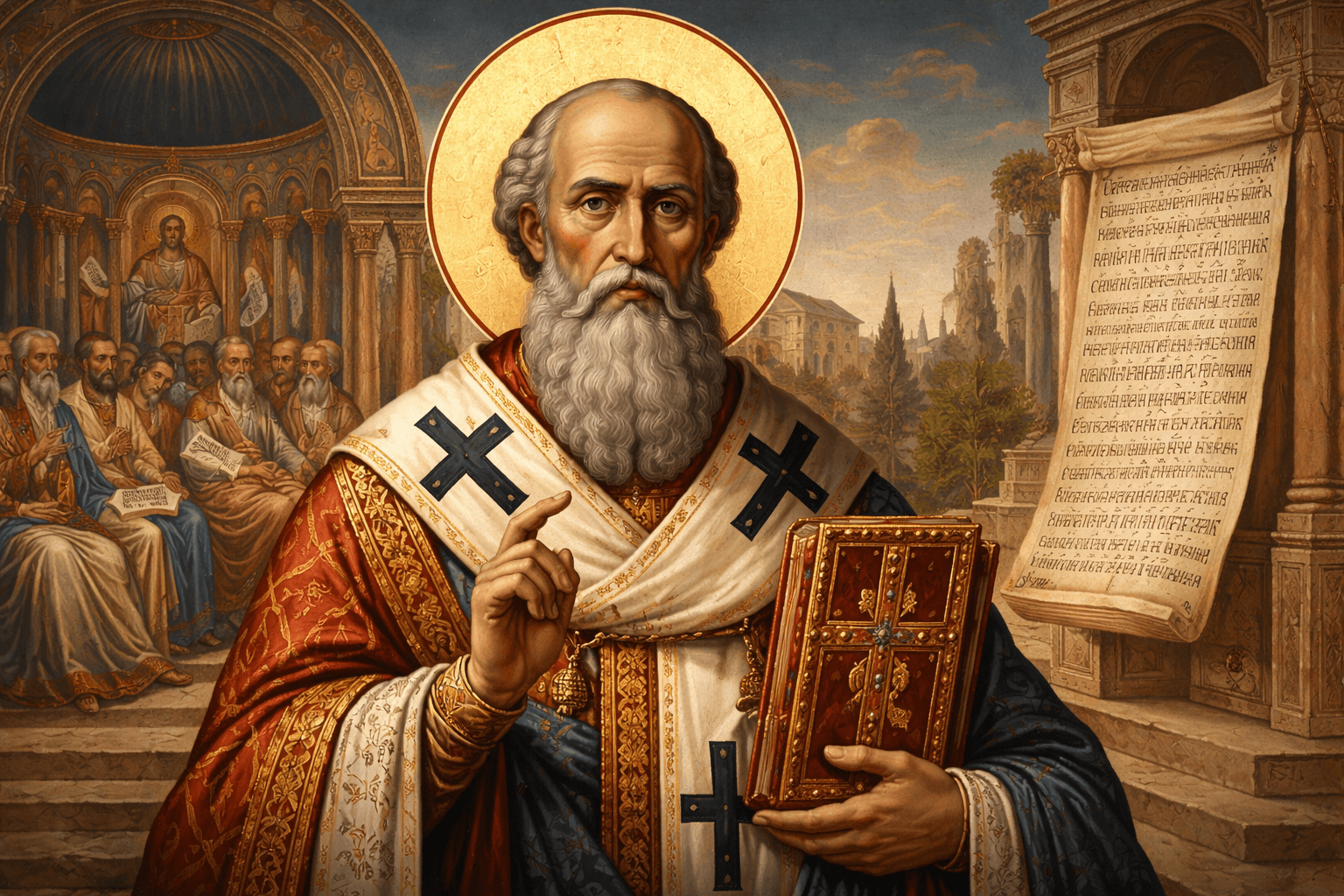
In the fourth century, when confusion about the identity of Christ shook the foundations of the Church, one bishop stood nearly alone in defense of orthodox faith. St. Athanasius of Alexandria tirelessly proclaimed that Jesus Christ is fully God and fully man—consubstantial with the Father.
As a young deacon, he attended the Council of Nicaea (325 AD), where the Church formally condemned Arianism—the heresy claiming that Christ was a created being and not eternal God. Later, as Bishop of Alexandria, Athanasius endured exile five times for his uncompromising defense of the Nicene Creed.
His courage gave rise to the phrase Athanasius contra mundum — “Athanasius against the world.” Even when emperors, bishops, and political powers opposed him, he remained steadfast in proclaiming the truth of Christ’s divinity.
Beyond theological controversy, Athanasius also played a crucial role in affirming the canon of Scripture. His 39th Festal Letter (367 AD) contains the earliest known listing of the 27 New Testament books exactly as recognized today.
He is honored as a Doctor of the Church and remembered as a pillar of orthodoxy whose clarity and perseverance preserved the Church’s confession of the Trinity.
Official Vatican biography outlining Athanasius’ life, his role at the Council of Nicaea, his repeated exiles, and his theological defense of Christ’s divinity against Arianism.
Why it matters: This source reflects the Church’s authoritative liturgical and historical perspective. It situates Athanasius within the broader development of Trinitarian doctrine and highlights why he is honored as a Doctor of the Church.
Comprehensive historical and theological treatment of Athanasius’ writings, controversies, episcopal leadership, and influence on Nicene orthodoxy.
Why it matters: This is one of the most detailed English-language theological treatments available online. It provides academic depth, especially on Arianism, Athanasius’ exile periods, and his doctrinal formulations.
Accessible overview of Athanasius’ life, major conflicts with Arianism, and his enduring legacy within Christian theology.
Why it matters: This source translates complex fourth-century Christological debates into clear, pastoral language—ideal for general readers seeking a faithful but understandable summary.
Historical Context
The fourth century was marked by intense theological conflict, particularly surrounding the nature of Christ. After the legalization of Christianity under Emperor Constantine, disputes that had once been regional became empire-wide crises. Arianism—teaching that the Son was a created being and not fully divine—spread rapidly among clergy and political leaders.
St. Athanasius stood at the center of this storm. His unwavering defense of the Nicene formula—homoousios (“of the same substance”)—was not merely semantic. It safeguarded the truth that salvation depends on Christ being truly God. If Christ were not fully divine, humanity could not be fully redeemed.
Major Writings
Athanasius was not only a defender in controversy but also a profound theologian and spiritual writer. His most important works include:
On the Incarnation – A masterful explanation of why the Word became flesh and how Christ restores humanity.
Four Discourses Against the Arians – A systematic rebuttal of Arian theology.
Life of St. Anthony – A foundational text in Christian monastic literature that helped spread the monastic movement throughout the Christian world.
Theological Significance
Athanasius’ theology shaped the Church’s understanding of:
The Trinity
The full divinity and humanity of Christ
The doctrine of deification (theosis)
The development of the New Testament canon
His legacy reminds us that doctrinal clarity often comes at great personal cost. Fidelity to truth, even in isolation, can preserve the faith for generations to come.
“The Son of God became man so that we might become God.” — St. Athanasius